
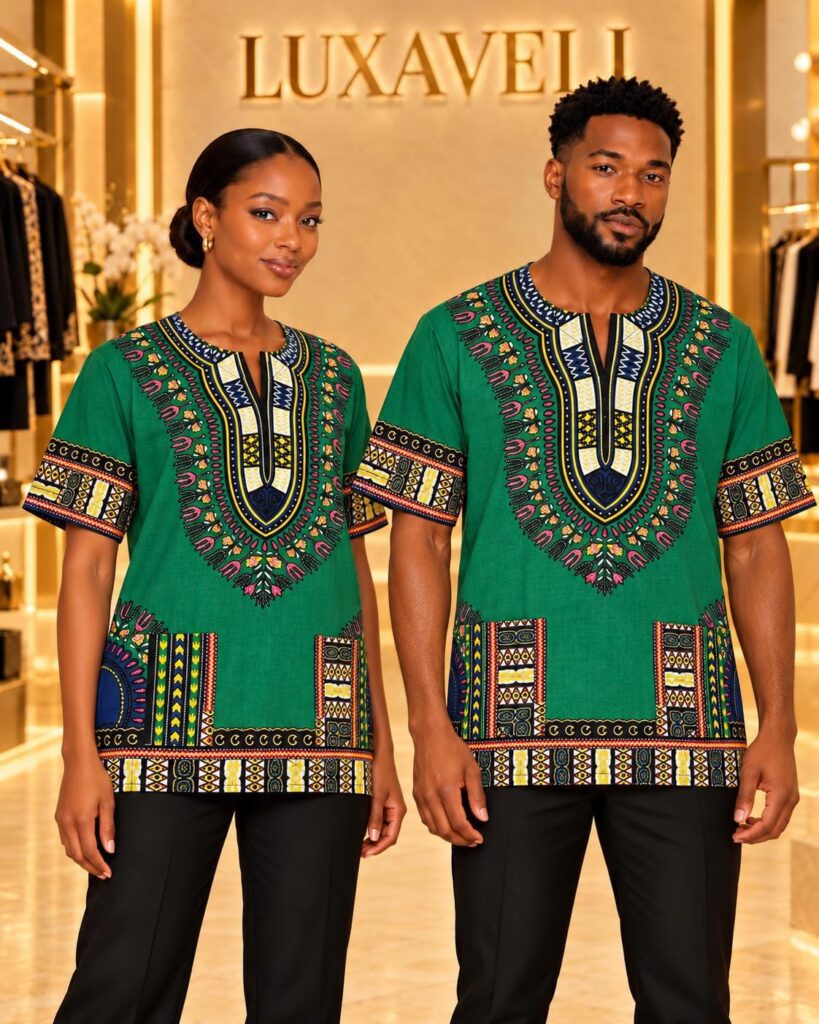
There is no single word that means exactly the same thing as dashiki, but a few names come close. The word is usually traced back to danshiki, an older West African form. A dashiki in its best-known pattern is often named after that print, the Angelina print. Longer, formal versions are sometimes called a Senegalese kaftan. In shop listings you will also see it described simply as an African print shirt. Here is what each name means, where it comes from, and how the dashiki relates to other garments you may see beside it.
The names you are most likely to hear
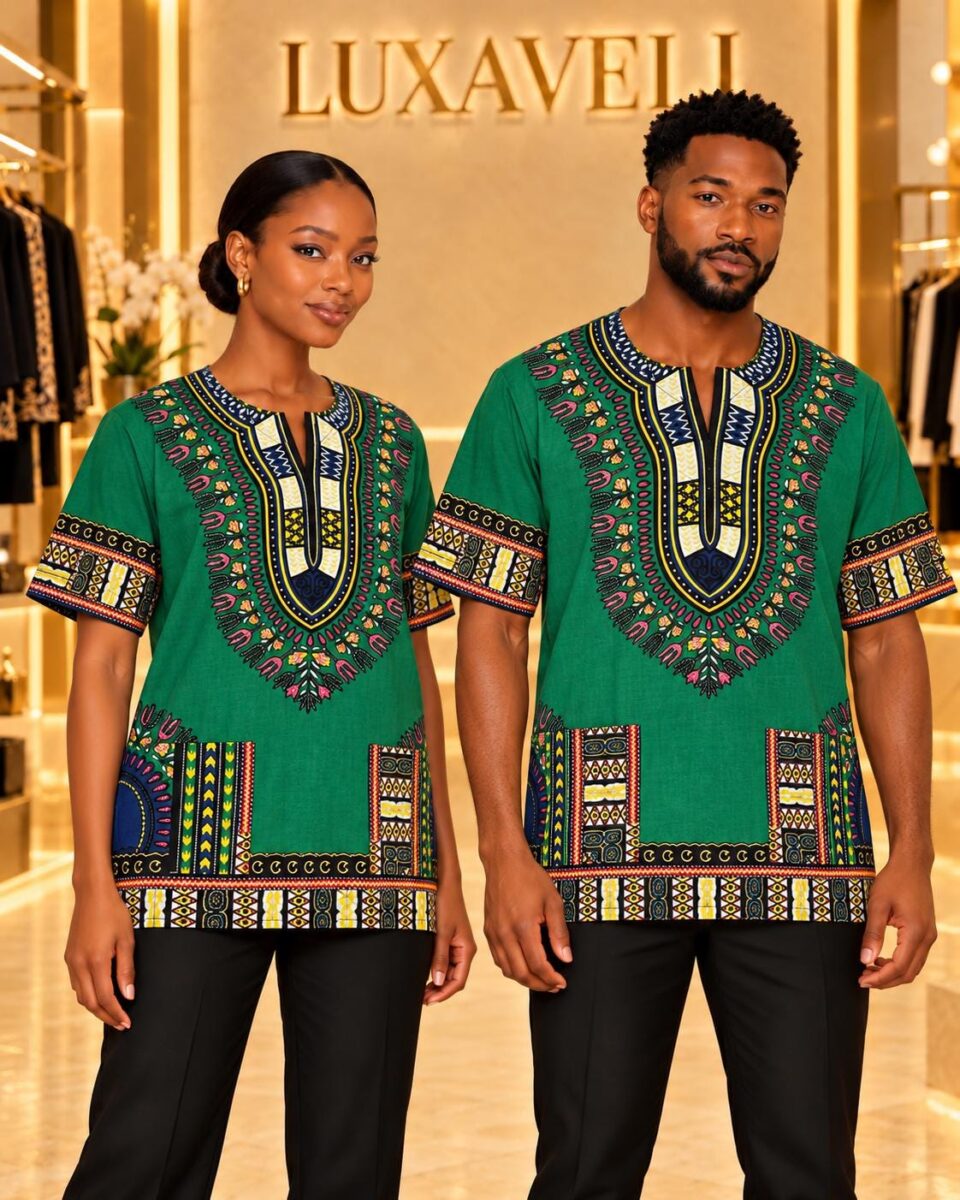
A dashiki is a loose, colorful pullover top that comes from West Africa. A common style has a V-shaped or rounded neckline with bold decoration around it and a relaxed body that skims rather than clings. Because it has traveled so far and been worn by so many communities, it has picked up a handful of related names along the way.
Not all of these are true synonyms. Some are older forms of the word, some describe the fabric, and some describe a longer or more formal cousin of the shirt. Knowing the difference helps you shop with confidence and talk about the garment with respect.
- Danshiki: an older form of the word, linked to West African languages.
- Angelina print: the name of the famous pattern that many people picture when they hear dashiki.
- Senegalese kaftan: a term used for longer, formal, ankle-length versions.
- African print shirt: a broad description you will see in shop listings.
- Dashiki shirt: the same garment, with the word shirt added for clarity.
Where the word dashiki comes from
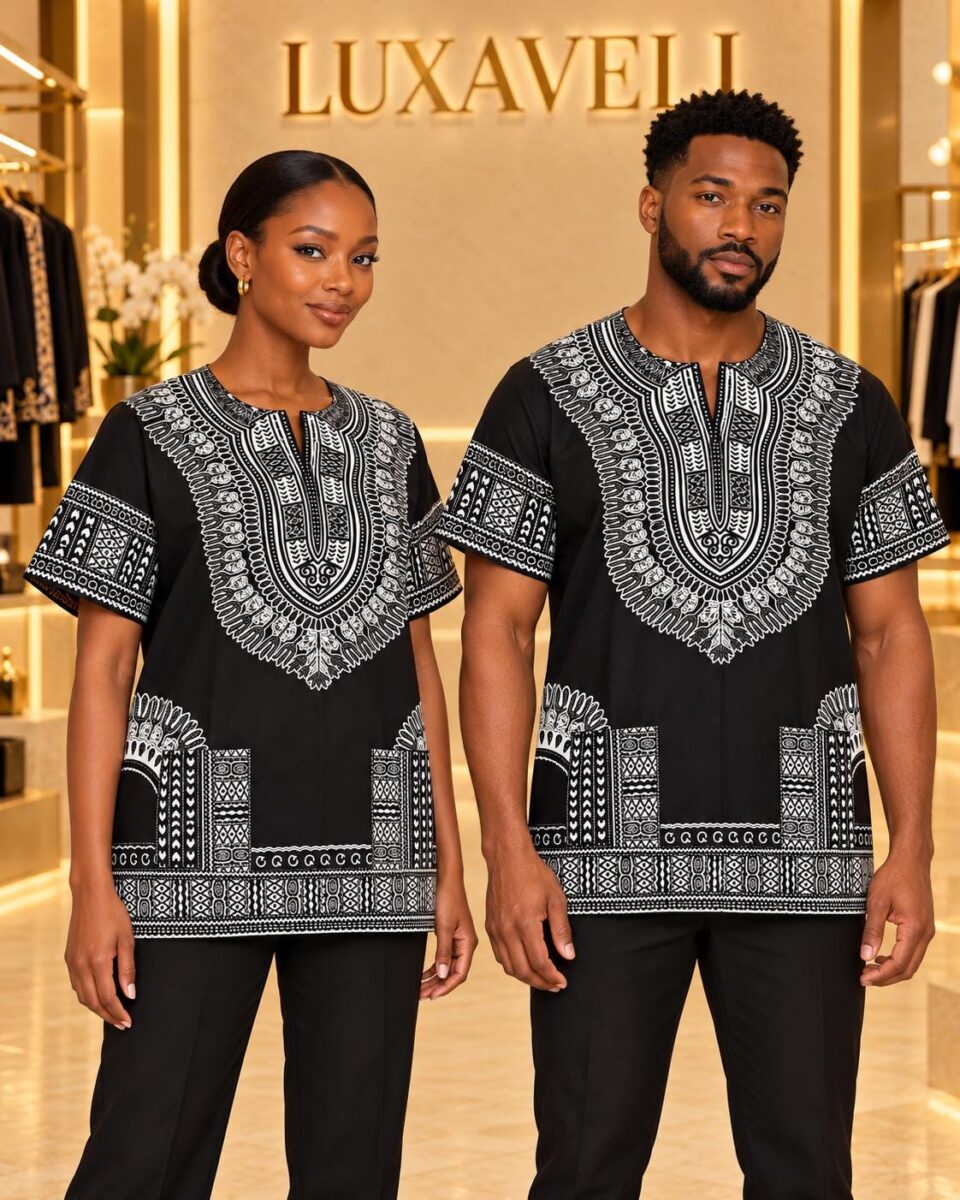
The word dashiki is generally linked to the Yoruba word danshiki, which is thought to have been borrowed from the Hausa phrase dan ciki. That phrase is usually explained as describing a shirt worn underneath. The Yoruba and Hausa are both major peoples of West Africa, so the name points back to the region the garment calls home.
It is worth saying plainly that word histories like this are not always certain. Sources agree on the West African roots, but the exact path from one language to another is harder to prove. If you see slightly different explanations elsewhere, that is why.
In the United States, the dashiki became closely tied to Black pride during the civil rights and Black Power era.
The Angelina print: when the pattern becomes the name
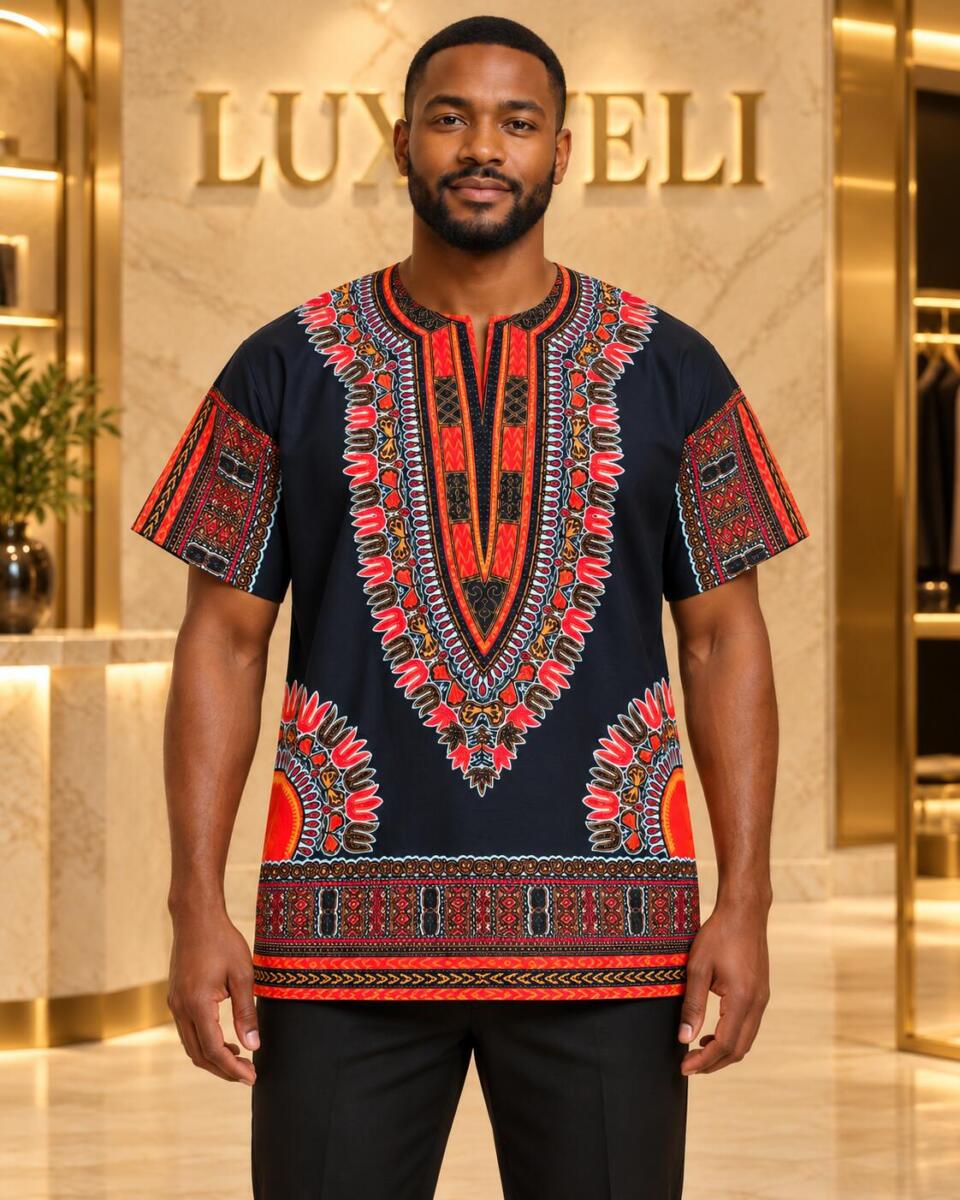
Many people use dashiki to mean one specific look, with bold decoration around the neckline. That design has its own name. The print is widely known as the Angelina print, a name that began in West Africa.
The pattern started life as a wax print by the designer Toon van de Manakker for the Dutch textile company Vlisco. In the West African market it came to be called Angelina after the Ghanaian highlife song of that name by The Sweet Talks. It is a lovely example of how a song, a market and a community can rename a design and make it their own.
So if you hear a shirt described by its print name rather than as a dashiki, the speaker may be talking about the pattern rather than the cut. A dashiki can be made in many fabrics, and the Angelina print can appear on many kinds of clothing.
Related garments that are not quite the same
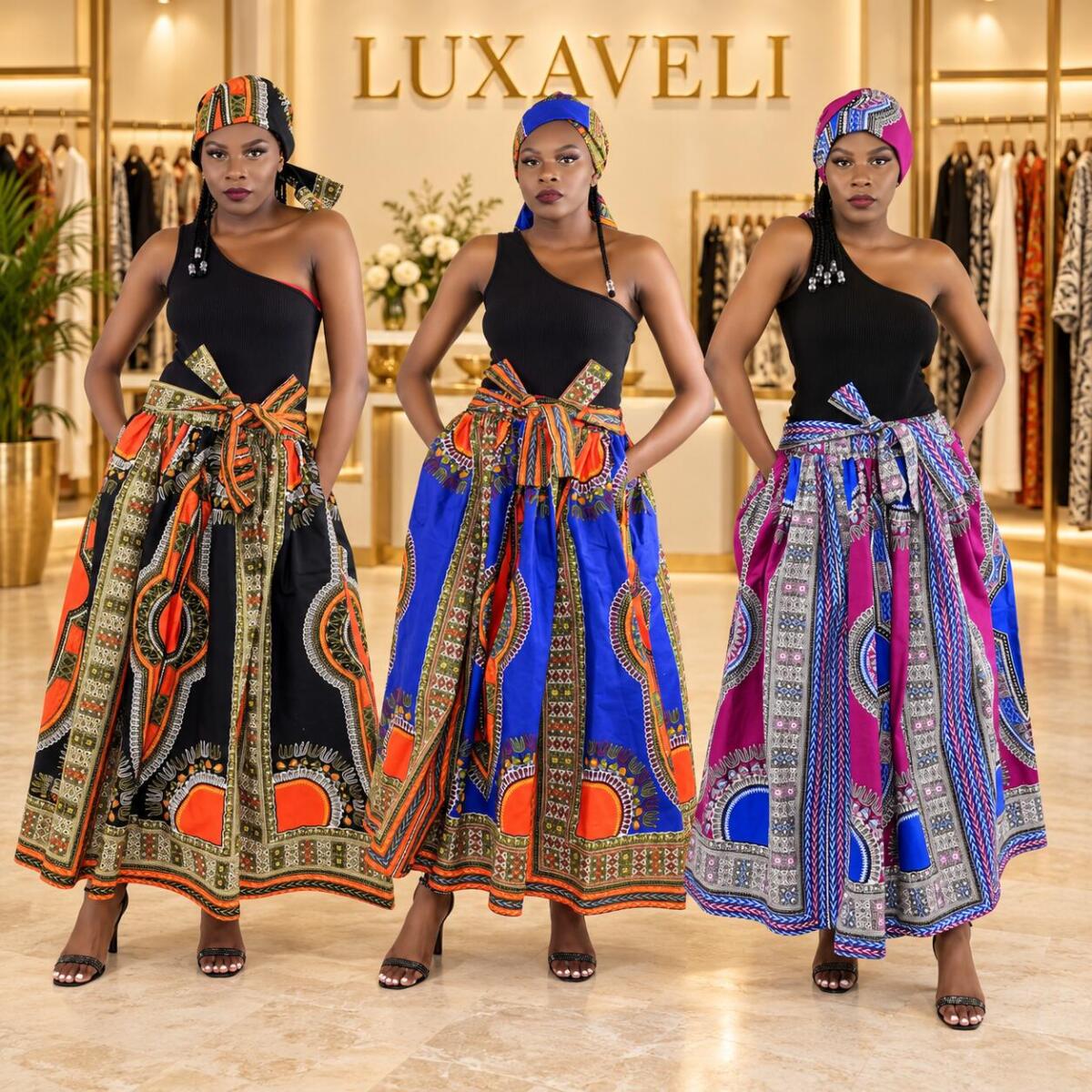
Several other African and African-inspired garments are often mentioned alongside the dashiki. They are related in spirit, but each has its own shape, fabric or story, so they are not interchangeable names.
Some of these terms describe fabric rather than a cut. Ankara, for example, refers to the bold wax-style printed cotton you see across West African fashion, so an Ankara top can be a dashiki or something quite different. Kente is a woven cloth closely tied to Ghana, and kente print shirts borrow its striking patterns.
Wikipedia also notes a women’s style that pairs a traditional dashiki top with a Western skirt, which shows how freely the garment has been adapted.
- Ankara top: named for the printed fabric, not a single cut.
- Kente print shirt: inspired by kente, a woven cloth with deep roots in Ghana.
- Agbada: a flowing, wide-sleeved robe from Yoruba culture, worn for formal occasions and quite different from a short pullover.
Choosing and wearing a dashiki with care
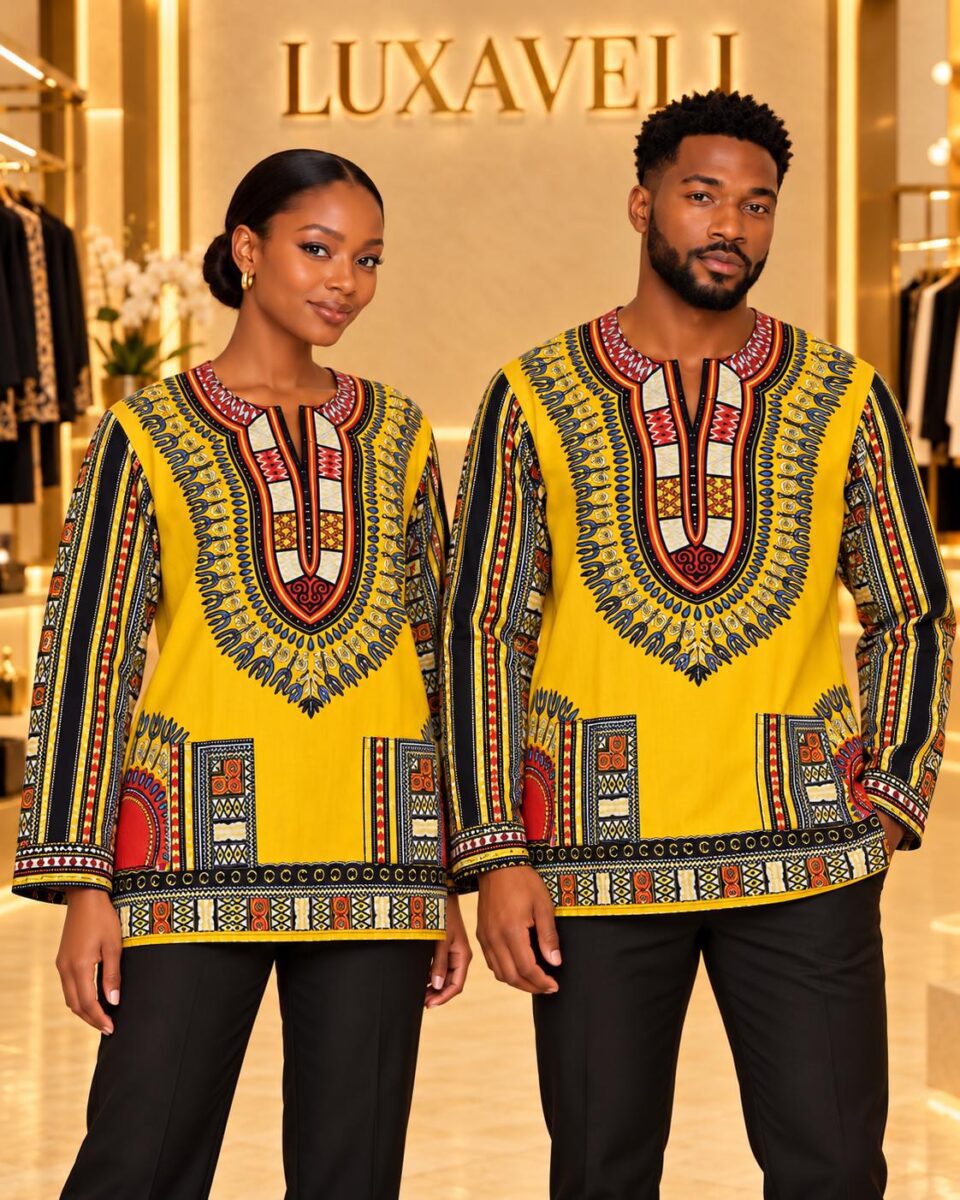
Whatever you call it, a dashiki is meant to be worn with pride. At Luxaveli, an African-inspired brand based in Leeds in the United Kingdom, our message is simple: Be proud of your origin. Wear the colour. That pride comes from knowing a little of the story behind the pattern on your shoulders.
When you shop, think about how you want it to fit. Most dashikis are cut loose for comfort and movement, so check measurements rather than guessing. Our size guide can help, and many of our pieces are unisex, which makes it easier to find a cut that suits you.
For readers in the US, we ship orders from New York, and you can find the details on our shipping information page. If you would like to see dashiki shirts, kaftan shirts, Ankara tops and kente print shirts side by side, take a look at our African prints collection and see which name, and which color, feels most like you.
Common questions
Is it okay to wear a dashiki if I am not of African descent?
Many people of different backgrounds wear dashikis. What matters most is respect: learn a little about where it comes from, wear it with care rather than as a costume, and avoid treating it as a joke or a novelty.
Does a dashiki have to use the Angelina print?
No. The Angelina print is the best-known pattern, but dashikis can be made in solid colors, other wax prints, embroidered fabrics and many different designs. The cut is what makes it a dashiki.
How do I pronounce dashiki?
In American English it is usually said duh-SHEE-kee (sometimes dah-SHEE-kee), with the stress on the middle syllable.